Love and ambition: the myth of the impossible choice
A feminism that truly challenges patriarchy creates space for women to pursue love and relationships on their own terms — without compromising their intellect, independence, or sense of self.
ESSAYSRELATIONSHIPS

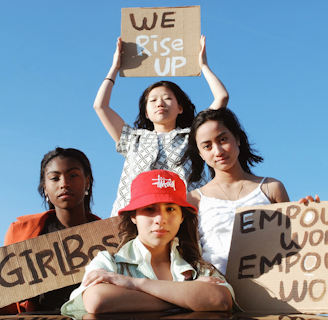
“As a woman, how do I balance career and family?"
Last Valentine’s Day, after reading feminist theorist bell hooks’ book All About Love, I released an essay on how love and greed cannot co-exist, not if we wish to experience it in its purest, most trusting form. hooks’ book had me glued to my seat from start to finish. I picked it up because a sad part of me wondered if the stereotype of the “career-focused woman being unable to find true love” had some merit. I had gone on an awfully uninspiring date. He was a sweet guy, but the date had me wondering: “If my mind were less complex, or if I had lower expectations, would it make dating easier? Would it make love easier?” Love and the power of knowledge felt like a red and blue pill – you could take one, but only one.
This turmoil came from the misunderstanding that love required selective blindness, while knowledge would maintain my agency.
Many women who wish to have both a family/love life and a fulfilling career have wrestled openly or privately with this question before: “How do I balance both at once?” Existing in a female body subjects you to this frustrating question, and it also hasn’t been that long since women were allowed – without public scorn – to ambitiously pursue both love and professional development. Have you ever watched a TV show starring a headstrong, career-oriented woman who is chronically single, divorced, or is wanted dead by her husband? Thank goodness she meets No-Personality Hot Man, who "softens" her by helping her realize that true love is what she needed. These strong-headed female characters are allowed either the red pill of love or the blue pill of power, and often not simultaneously unless they drastically sacrifice their goals or even their life, and often, for the sake of No-Personality Hot Men.
The belief that women cannot be ambitious and maintain a healthy romantic relationship at the same time is, at its core, a profoundly misogynistic view. It oppresses women by shoving them into boxes filled with suffocating gender roles, expectations, and sexist beliefs. Single men who are highly dedicated to their careers are not perceived as difficult to love, unfulfilled, or selfish. Their ambition is praised, as it translates into confidence, focus, and the ability to provide financially for their future family, if they wish to start one.
Ambition and I have a complicated relationship. In college, I learned how I used busyness to distract myself from issues I had been denying, such as an eating disorder that fed my monstrous desire for perfection and control. Admitting to myself that I was suffering brought anger and grief to the forefront, which my razor-sharp focus on career could temporarily put to rest by offering me an illusion of self-worth. Achievement’s empty promise often made me feel frustrated and numb, as no amount of accolades will ever be enough, the same way no number on the scale will ever be low enough for somebody with an eating disorder.
But this discontentment was not due to the absence of fulfilling romantic love, as anti-feminists like to claim. Rather, its root was the absence of self-acceptance. Our ability to love or accept others is an active reflection of our ability to love or accept ourselves in our most naked form, stripped of accomplishments or value given by society. I’ve yet to meet a truly content woman whose sense of worth comes from a man, rather than from herself and/or a higher being whom she believes bestows an unshakeable identity not contingent on male approval.
It turns out that working towards self-acceptance through therapy, goal-setting, self-reflection, loved ones, and my Christian faith was exactly what I needed to become my most confident, joyful, and empathetic self. It made work purposeful; it made me more authentic. We tend to roll our eyes when women say they want to focus on themselves before stepping into the dating scene. We roll our eyes because we think women who fiercely pursue themselves are hiding their selfishness and lack of fulfillment behind the facade of a “strong and independent woman who doesn’t need a man.”
Well? Yes. We are strong and independent women... and we don’t need a man. And kindness and fulfillment can exist in the presence of such a reality. Trying to put women into yet another dichotomy of this-or-that is the only way anti-feminists can imagine women. It’s heartbreaking.
Except when he needs a vague reason to leave a relationship, I rarely hear the average man admit that he needs to work on himself. Though a majority don’t realize it, men also suffer from patriarchy’s grip, as emotional suppression hinders introspection – a key ingredient to growth, maturity, and meaningful relationships. Even when a man decides to work on himself, it’s rarely motivated by the desire to be liked by women, as boys are not socialized the way girls are to center major decisions around romantic love.
Ultimately, women do not become feminists because they are bitter freaks who hate compliments and the smell of roses. Feminists, like any other human being, share the universal need to be heard, acknowledged, seen, and loved. Love does not require compromise on intellect but often leads to intellectual growth, when the love is right. The misogynistic narrative that feminists are difficult, oversensitive, or intimidating is rooted in patriarchal discomfort with empowered women. This narrative then asks women to choose between ambition and emotional fulfillment, but in reality, feminists — just like anyone — seek love that affirms their personhood, not their utility, achievement, or appearance (by the way, this love is not limited to romantic). Many feminists like myself still wrestle with gender norms and the false belief that we cannot pursue knowledge and love, career and family, self-love and romantic love, all at the same time. These complexities do not negate feminists’ arguments but reveal how deeply ingrained sexist, stereotypical, and patriarchal views are, and the worthwhile effort it takes to unravel them all.
Feminists believe in empowerment — intellectual, emotional, physical, financial, spiritual. They wish for women the freedom to pursue a strong, good, and true love without the fear of harassment, and an ambitious career without the fear of judgment. Part of having choice is being able to experience contentment through career, friendships, hobbies, and self-growth, with or without a romantic relationship. Part of that choice is also to become a stay-home mom, although I believe women who “choose” this have less choice than they think. I’d encourage all women to pursue education and/or career to maintain financial, intellectual, emotional, and personal independence – at least when their season of life allows it.
Additionally, we must remind ourselves and other women that wanting love is not a sign of weakness but of humanness. Do you know how much strength and discernment it takes to have a deeply trusting connection with another being? It is not our relationship status that makes us more or less of a feminist, and to fall for that belief would be submitting to the punishment of patriarchy, which shapes our entire identity around men.
A feminism that truly challenges patriarchy creates space for women to pursue love and relationships on their own terms — without compromising their intellect, independence, or sense of self. As we navigate the complexities of love and ambition, perhaps the real challenge isn’t in finding balance, but in dismantling the systems that insist we can’t have both.
Because when we stop questioning our worth based on fear-driven narratives, we realize that love — romantic, platonic, God-given, and self-given — is not about what we can give or prove, but about who we are at our most authentic.
Maybe the real question isn’t whether we can balance both, but why we ever believed we couldn’t.
petals & thorns.
essays exploring personal reflections, culture, society, and faith
Email: jessiejmcheng@gmail.com
© 2025. All rights reserved.